
About Chion-in Temple
Chion-in Temple traces its origins back to 1175 (the 5th year of Jōan), when Hōnen Shōnin, the founder of the Jōdo-shū (Pure Land Buddhism), established a small hermitage in the Yoshimizu area. It is the head temple of the Jōdo-shū sect, built on the sacred site where Hōnen Shōnin spread the teachings of the Nembutsu and later entered Nirvana.
The temple’s official name is Kachōzan Chion-kyōin Ōtani-dera.
During the Edo period, Tokugawa Ieyasu, a devoted follower of Jōdo-shū, designated Chion-in as his family temple in Kyoto. As a result, the temple grounds were greatly expanded, and the magnificent temple complex seen today was constructed.
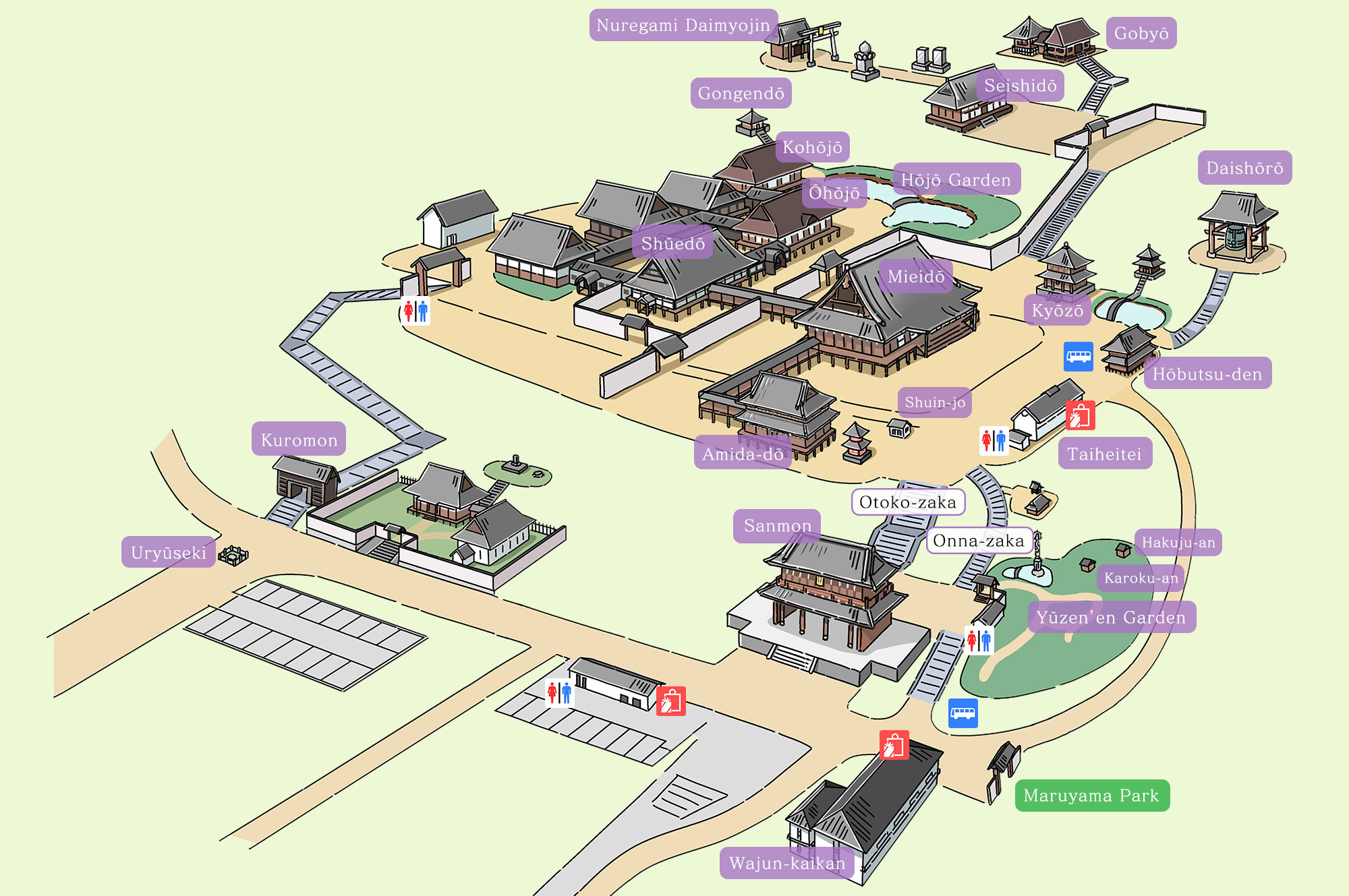 ※ Tap to enlarge.
Free Shuttle Bus
A free shuttle bus operates between the Sanmon Gate of Chion-in Temple (in front of the temple guide map sign)
and the Mieido Hall area (in front of Taiheitei).
Please feel free to use this service when visiting the temple.
【Operating Hours】
9:00 AM – 4:00 PM (except from 1:00 PM to 2:00 PM)
※ The shuttle runs continuously back and forth during operating hours.
Temple Grounds & Admission
The grounds of Chion-in Temple are open to the public and can be freely explored without an admission fee.
However, an admission fee is required to enter the following two gardens: Yuzen-en Garden and Hojo Garden.
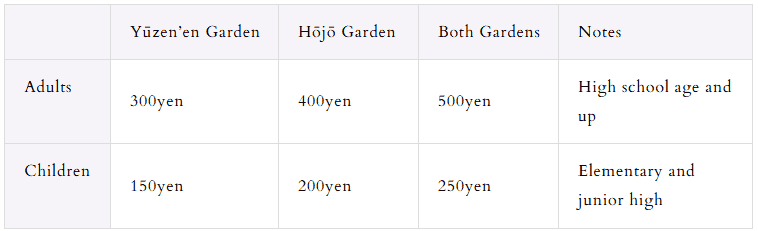
Visitors with a disability certificate may enter the gardens free of charge.
Please present your certificate at the admission counter.
(An admission fee is required for accompanying persons.)
If you add the Wajun Kaikan official LINE account as a friend and receive shop card points at the front desk,
you will receive free admission tickets for both gardens for the number of guests in your party (first time only).
Please ask a front desk attendant for details.

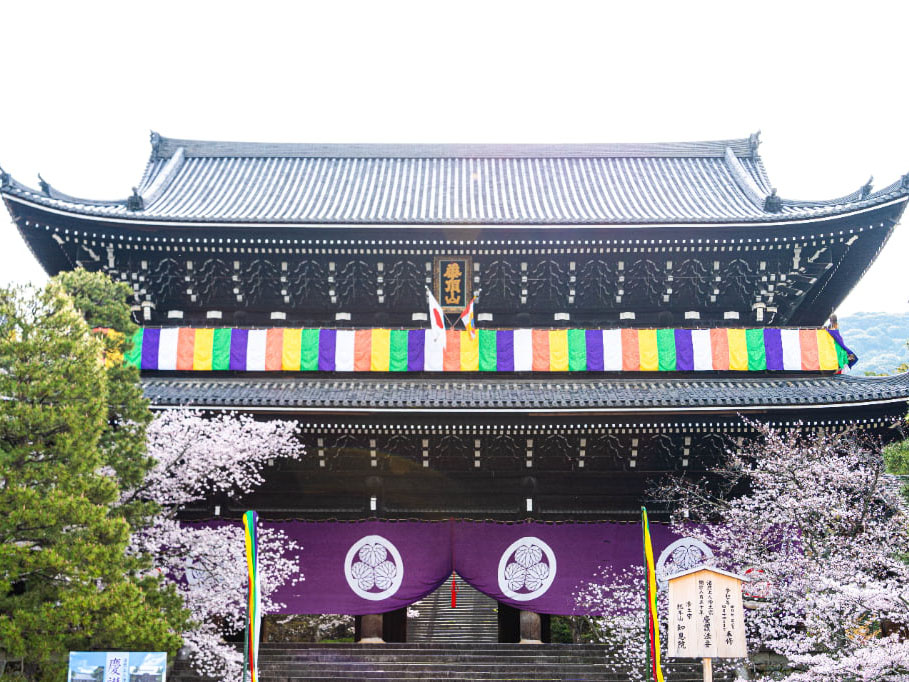
Sanmon Gate (National Treasure)
The Sanmon Gate, standing directly in front of Wajun Kaikan, was built in 1621 (Genna 7) by order of Tokugawa Hidetada, the second shogun of the Tokugawa shogunate.
It is one of the largest wooden temple gates in Japan in terms of both structure and scale. The plaque displayed on the gate bearing the name “Kachōzan” is larger than two tatami mats.
The Sanmon Gate represents the “Sangedatsumon” , symbolizing three paths to enlightenment:
Kūmon , Musōmon, and Muganmon .
The interior of the gate is normally closed to the public, but special openings are held approximately twice a year.
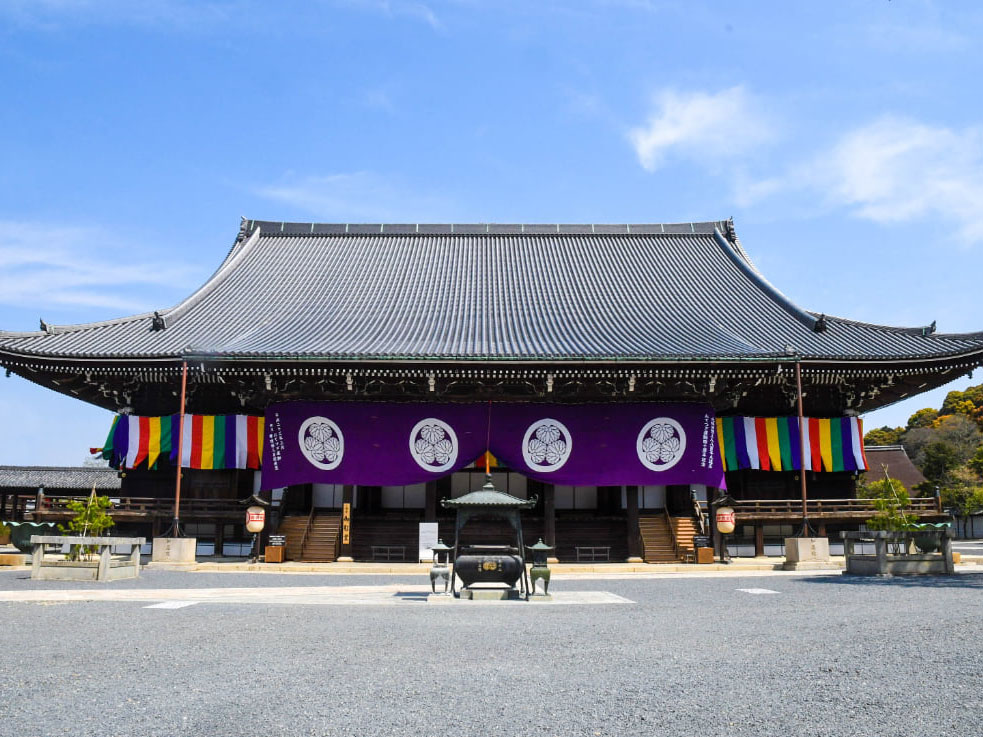
Mieido Hall (National Treasure)
The Mieido Hall enshrines the portrait (mie-i) of Honen Shonin, the founder of the Jodo sect of Buddhism. For this reason, it is called “Mieido,” and is also commonly referred to as the “Daiden” (Great Hall). It serves as the main hall of Chion-in Temple.
The present Mieido Hall was constructed in 1639 (Kan’ei 16) by Tokugawa Iemitsu, the third shogun of the Tokugawa shogunate. Measuring approximately 45 meters in width and 35 meters in depth, and surrounded by a 3-meter-wide outer veranda, this magnificent structure has long welcomed countless worshippers as the principal hall for the practice of the Nembutsu.
※Photography is not permitted inside the hall.
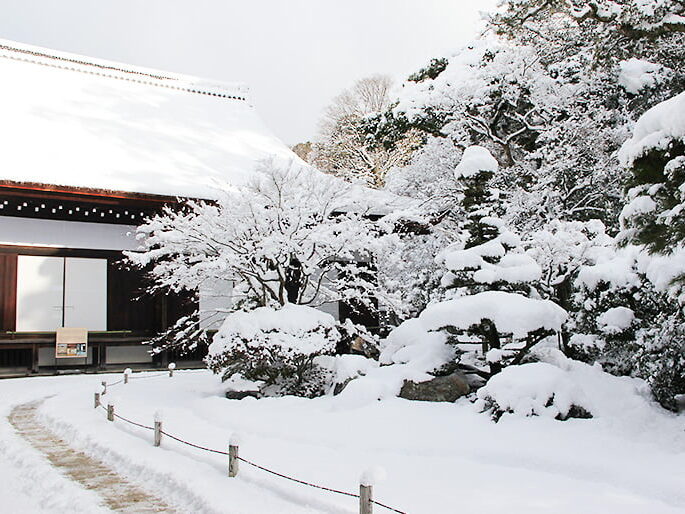
Hojo Garden (National Scenic Site)
The Hojo Garden is believed to have been created in the early Edo period by the monk Gyokuen, who was closely associated with Kobori Enshu.
This stroll-style pond garden harmonizes beautifully with the elegant architecture of the Hojo building and the scenic Higashiyama mountains rising behind it, creating a refined and tranquil landscape filled with traditional Japanese aesthetic charm.
Yūzen Garden
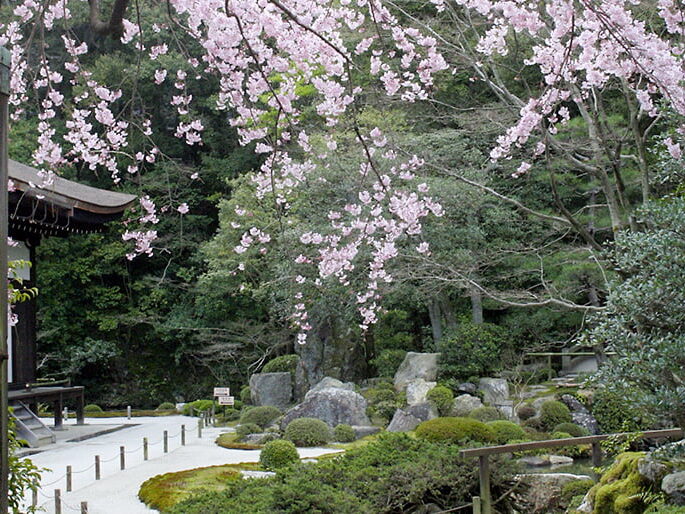
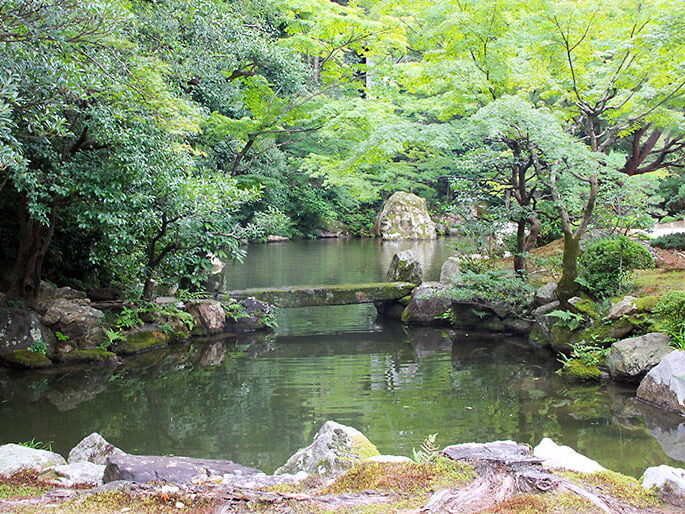
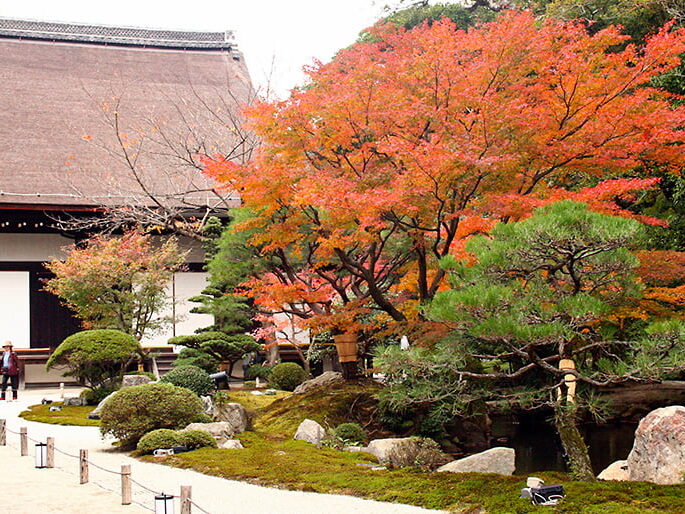
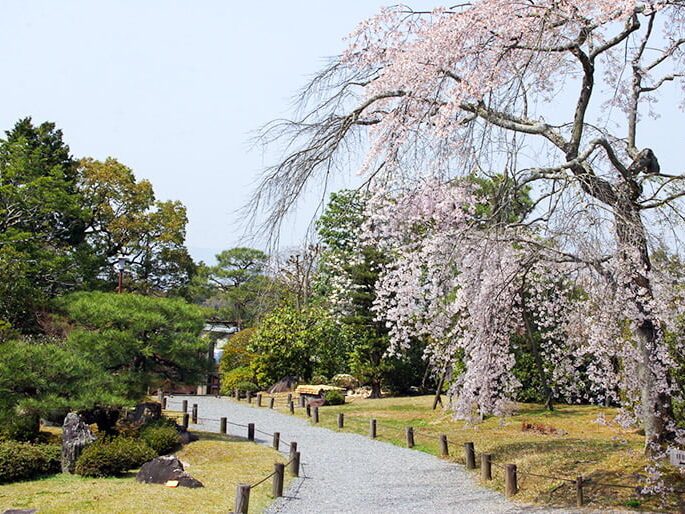
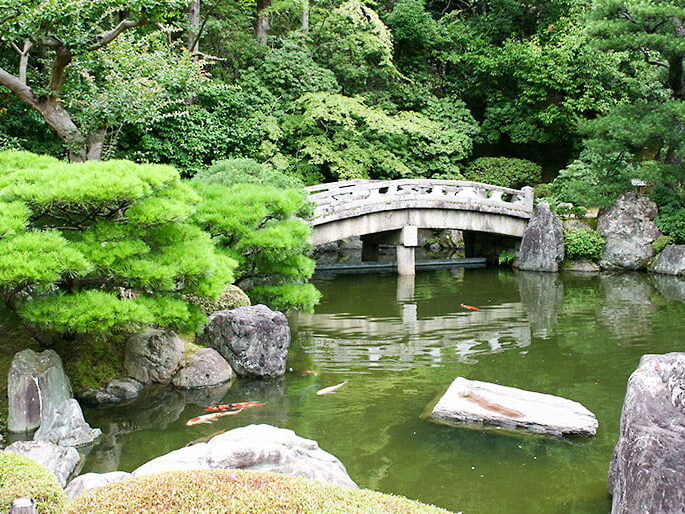
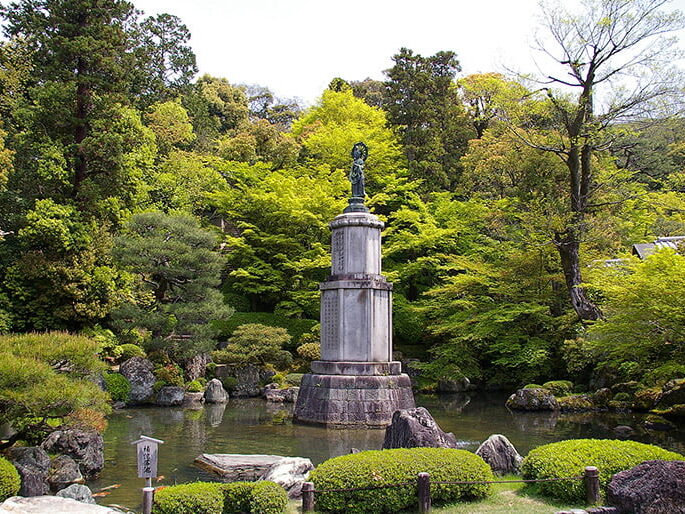
Yūzen Garden was renovated and landscaped in 1954 to commemorate the 300th anniversary of the birth of Miyazaki Yūzen, the founder of Yūzen dyeing.
This renowned Showa-era garden is composed of two distinct styles: a garden fed by spring water from the Higashiyama mountains, and a traditional dry landscape (karesansui) garden.
Within the garden are two tea houses: Karoku-an, associated with the Urasenke school of tea ceremony, and Hakuju-an, which was relocated in celebration of the 88th birthday of the 86th head priest of Chion-in, the late Archbishop Koryu Nakamura.
Surrounded by deep greenery, these tea houses add a refined atmosphere befitting a garden that beautifully expresses the spirit of Japanese aesthetics.
Other Buildings
For information on other buildings within Chion-in Temple, please visit the official Chion-in website.